
Ideas + inspiration / Rolling Minds
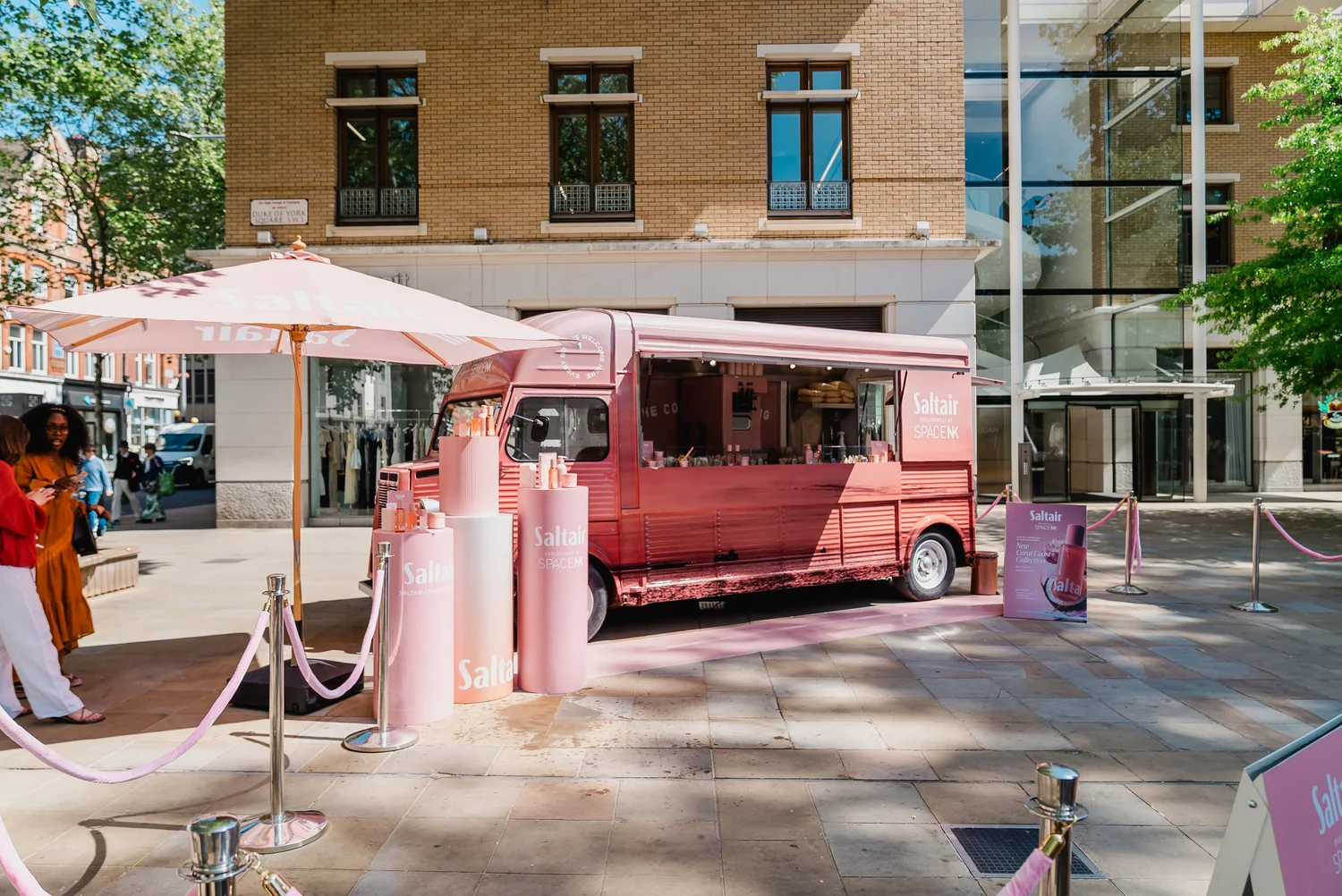
A pastel van outside a beauty retailer. A bright pink truck with a wheel to spin and a soft serve to collect. A black vehicle waiting beneath the screens at a gaming premiere. The format might be familiar, but the invitation can be completely different.
That is the interesting part of a promotional vehicle activation: deciding what happens around the vehicle, at the serving hatch and in someone's hand afterwards. The wrap sets the scene. The experience gives people something to do within it.
For a marketing team planning a launch, retail partnership or live event, the useful question is: what could our audience actually experience here? A flavour developed around the campaign? A small, welcoming space to discover a collection? A recognisable piece of a fictional world?
These ideas draw on real projects from Rolling Minds and Pan-n-Ice across beauty, music, gaming, fashion, fitness and food. They also look at the practical choices that turn a good-looking vehicle into an experience that feels considered from first look to last scoop, sip or sample.
111SKIN: give product discovery a setting of its own
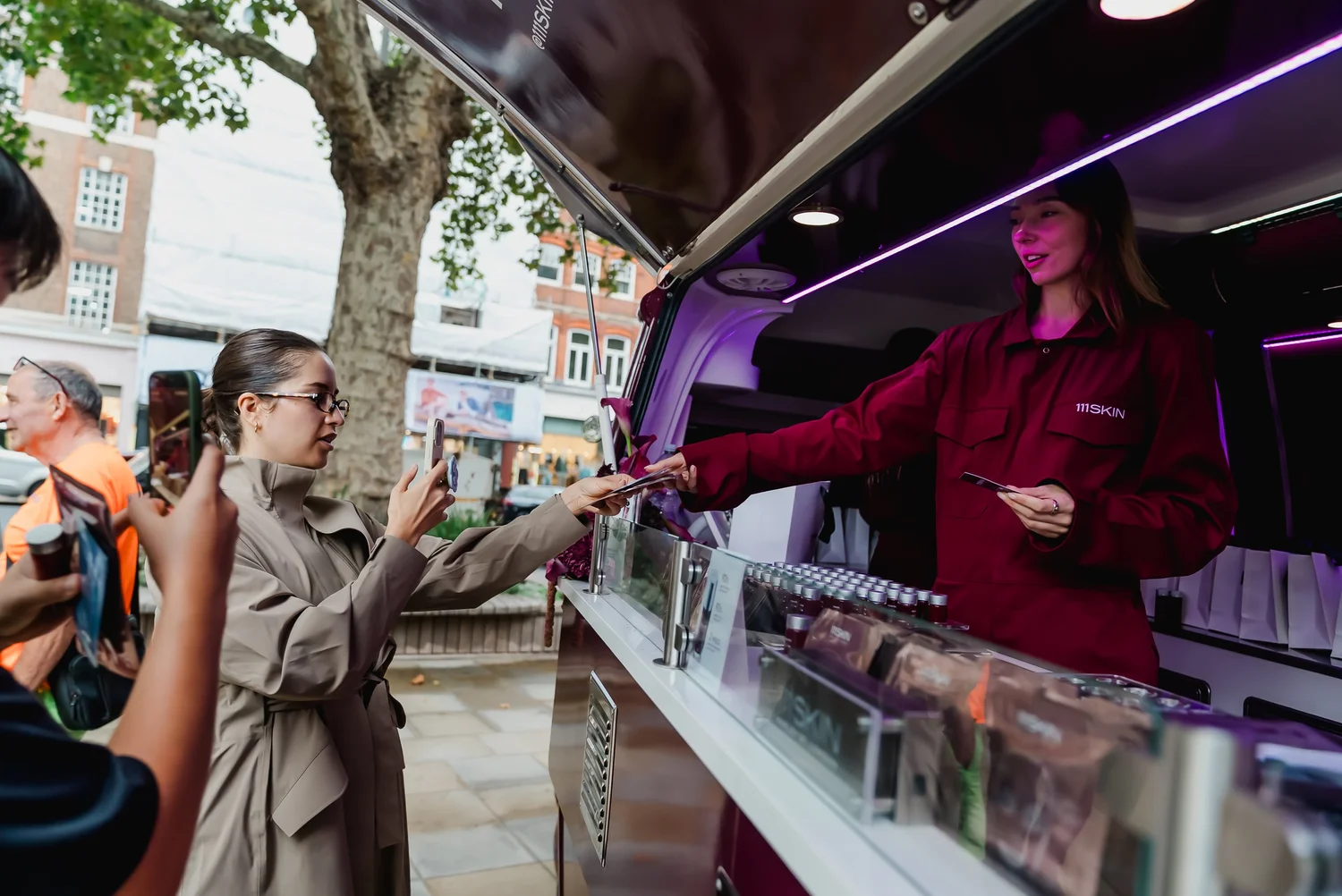
Beauty sampling has plenty of scope for a more personal encounter. A product needs room to be noticed, a clear introduction and a way for someone to continue exploring after the event.
The 111SKIN x Space NK Repair Van brought a branded VW-style promotional truck and juice shots to London's Duke of York Square. A parasol, flowers, branded plinths and queue ropes extended the presentation beyond the van. Guests could explore personalised skin consultations and a scratch-to-win activity, while prescription-style cards added a considered printed detail.
Those elements give a creative team several things to think about. A plinth can bring a small product up to eye level. A parasol can help define the space around the serving point. A well-designed card can carry the explanation that would be difficult to squeeze onto a cup. Each has a role beyond adding another logo.
The idea is especially useful for skincare, fragrance or haircare launches where a short conversation matters. You could introduce a product at the display, offer a drink at the hatch and provide a card directing guests towards the range or a nearby retailer. The sequence should be simple enough to understand on arrival, with room for people who want a closer look to step away from the collection point.
Take the approach, rather than borrowing the styling. A different beauty brand might call for crisp, minimal surfaces or a colourful botanical setting. The product, drink, display and printed takeaway should all feel like they belong to the same campaign.
Olivia Burton x H.Samuel: bring the collection into the experience
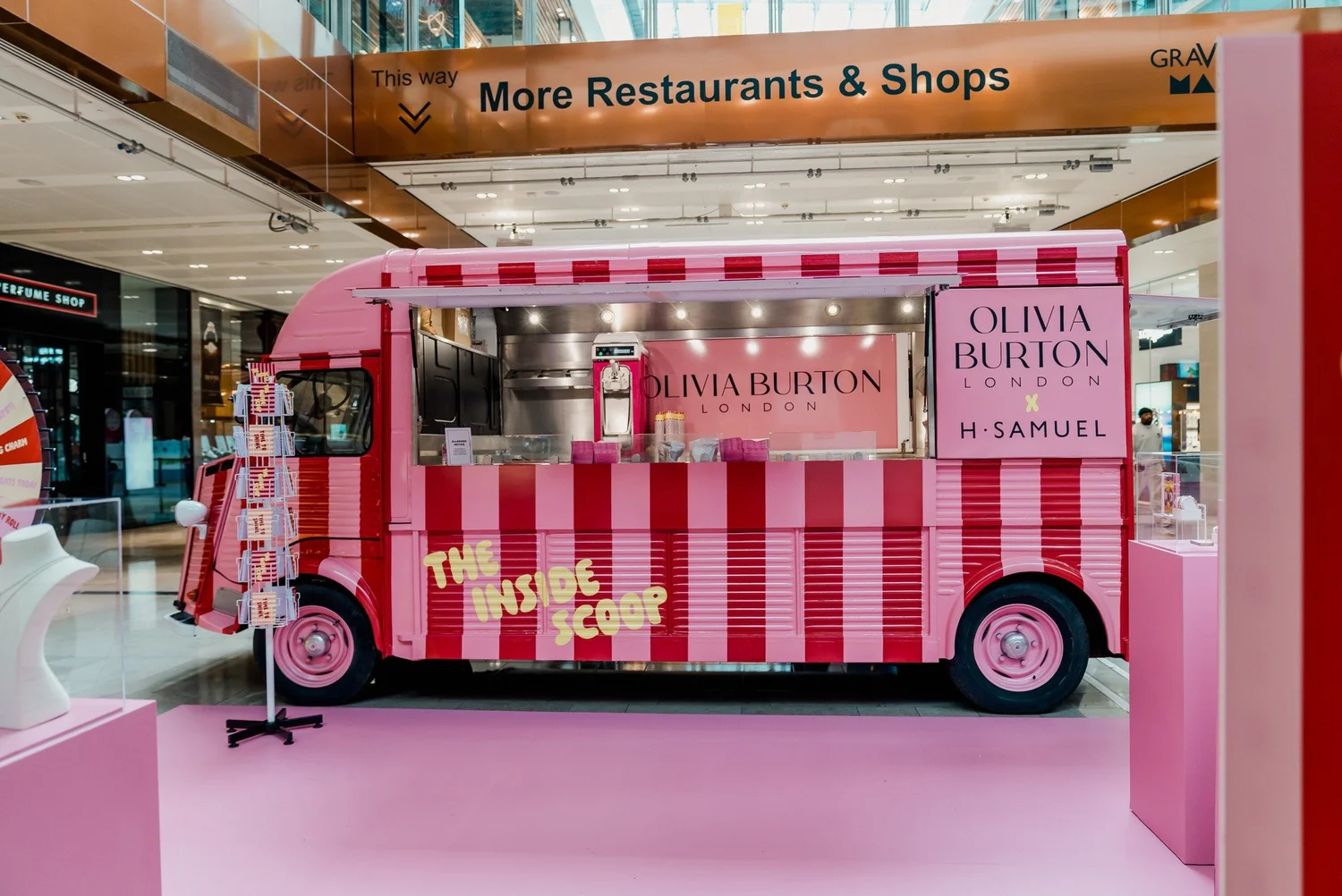
A watch or jewellery launch presents a lovely creative challenge: how do you give small, detailed products a presence in a much larger event setting?
For Olivia Burton x H.Samuel, a pink and red Citroën HY truck formed the backdrop to a summer collection activation. Custom flooring helped establish the surrounding area, with product displays on plinths and a spin-to-win interaction. Soft serve, branded biscuits and colour-matched sprinkles carried the design into the food. Postcards and QR codes supplied further connections to the campaign.
There is a useful change of scale here. The vehicle provides a strong visual introduction; the display invites someone to look at the detail. The game gives guests an active part in the visit. The ice cream gives them something to enjoy while they spend a little more time in the space.
For a new collection, imagine planning the visit as a series of easy choices. Someone can browse first, another can join the game, and a friend can collect a soft serve. Staff need to be able to explain the connection between those activities without delivering a long script.
Keep the product visible throughout. A display tucked behind the busiest part of the queue will struggle to do its job, however beautiful the plinth. Position it where guests can approach comfortably, and decide whether handling, trying on or simply viewing the product suits the brief. The details that make the experience pleasant should also make the collection easy to discover.
Pepsi: make the menu part of the creative idea
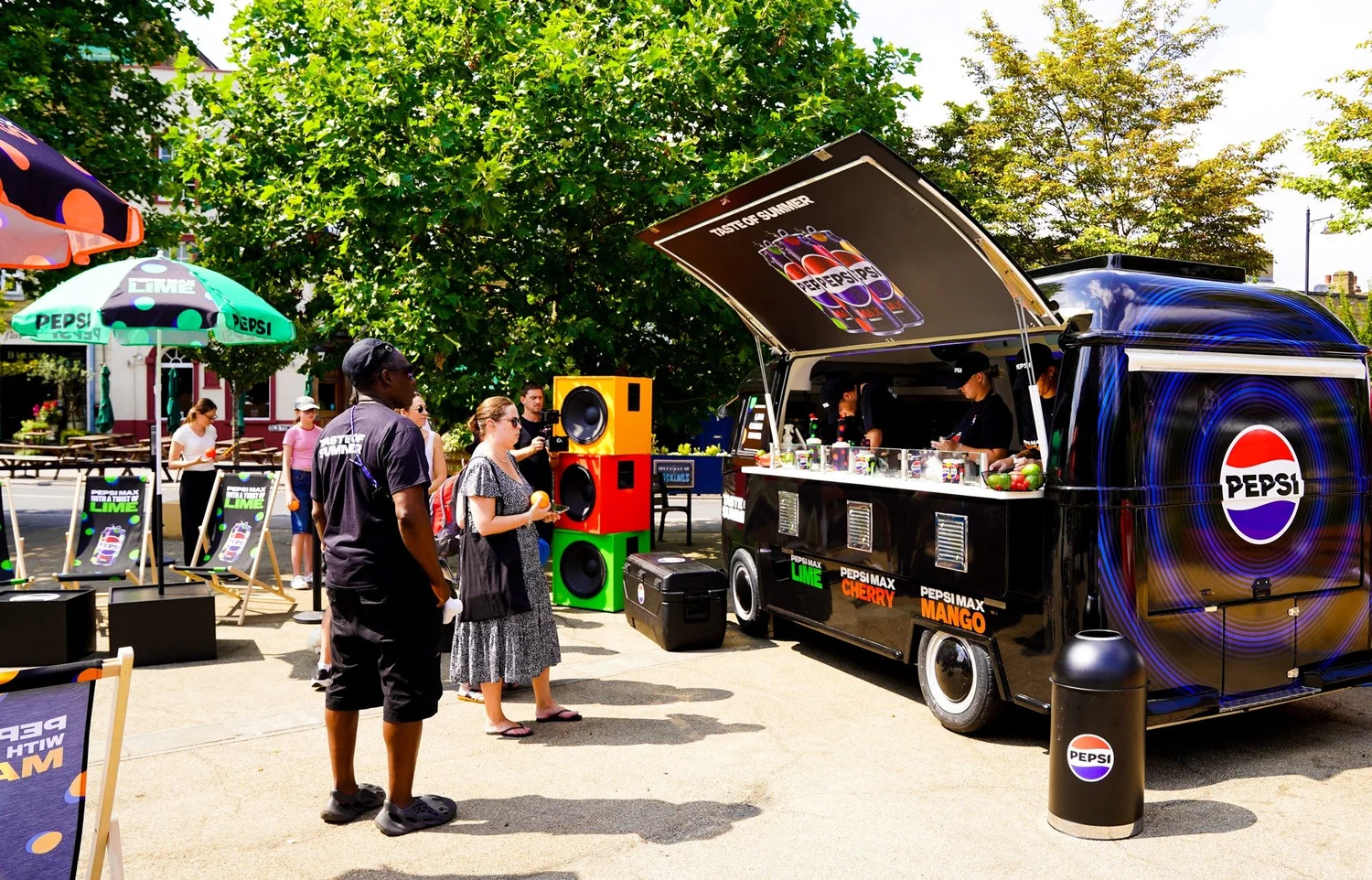
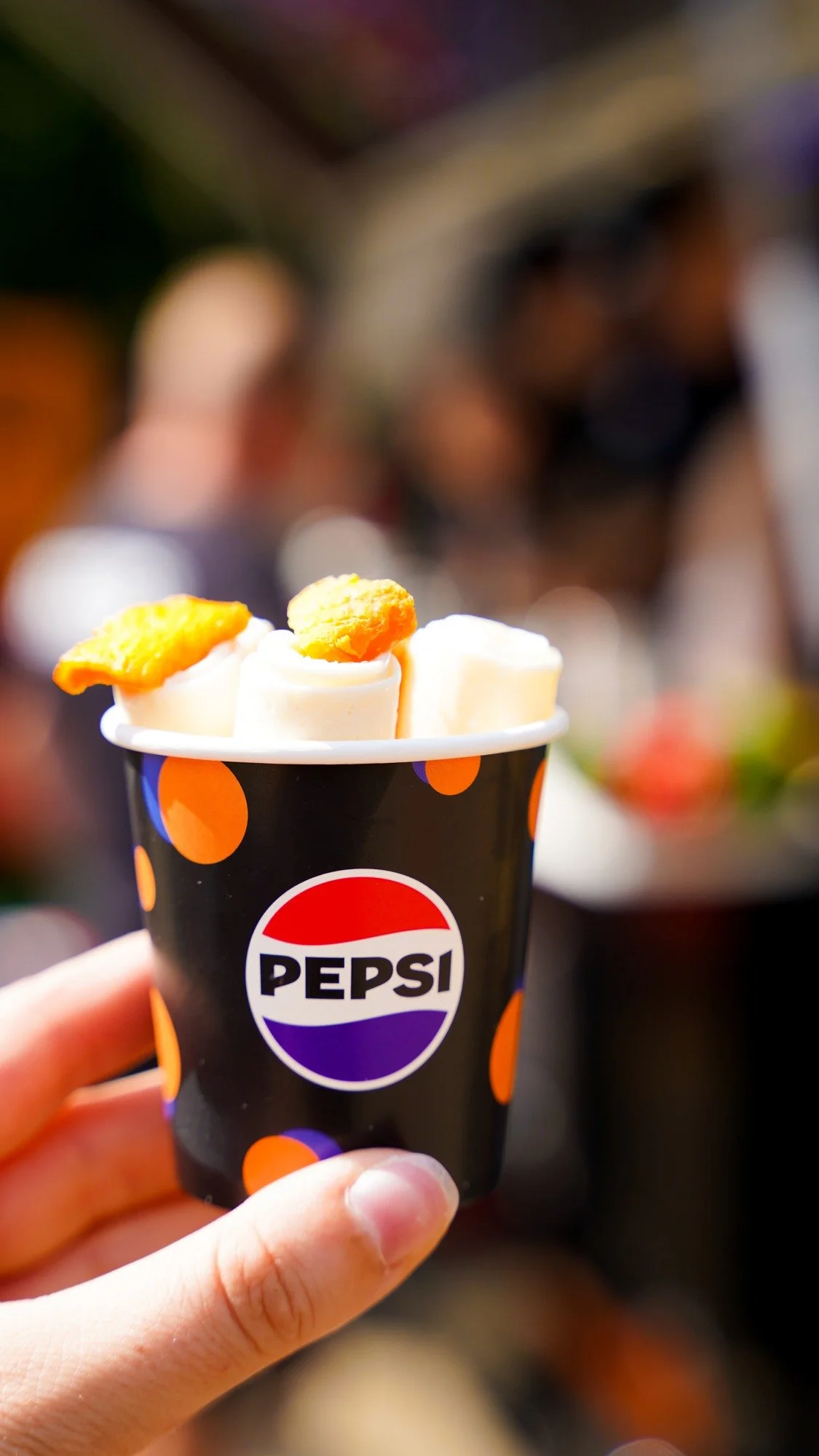
Sometimes the most interesting expression of a brand is something you can taste.
The Pepsi activation paired a branded VW-style promotional truck with chairs, branded cups and custom-flavour ice cream rolls. The food, packaging and setting gave the identity several places to appear, from the vehicle itself to the portion handed to a guest.
Ice cream rolls offer an obvious creative opportunity: preparation can be part of what people watch. A bespoke flavour, a considered topping or the way the finished serving is presented can give the menu a connection to the campaign. The exact recipe matters more than an elaborate name, so tasting and presentation should be part of development.
Think about what the audience will have time for. At an event where people can settle in, chairs and a visible preparation area could encourage a relaxed stop. Beside a busy retail entrance, a simpler collection arrangement may be more appropriate. The right choice follows the setting and the brief.
There is also a practical distinction between a beautiful test serving and a menu that works repeatedly during live service. Plan the ingredients, equipment, portion, cup and handover together. If guests need two hands to carry everything, somewhere to pause becomes a useful part of the design.
The principle extends well beyond ice cream. Juices, coffee, mocktails and warm samples can all express a campaign through flavour, colour and presentation. Our food and drink brand activations explore how that menu thinking fits into a complete experience.
Netflix's Scoops Ahoy: bring a fictional world to the street

For an entertainment brand, a vehicle can be an invitation to step closer to a place the audience already knows.
In the Pan-n-Ice x Netflix collaboration, that place was Scoops Ahoy, the nautical ice cream parlour from Stranger Things. The project included four limited-edition ice cream flavours and a two-week UK truck tour, beginning at Outernet London on Stranger Things Day. Pan-n-Ice and Netflix worked together across concept development, product design and delivery.
The connection between the story and the food is immediately understandable. Scoops Ahoy already gives the serving experience a reason to exist. Fans can encounter a familiar name in a real setting and order something that belongs to that world.
For a different entertainment brief, look for an equally natural invitation. What could a visitor do that makes sense within the story? What detail would a fan recognise before reading an explanation? That might lead to a particular style of counter, packaging or menu rather than a literal reconstruction of a whole set.
Consistency matters at close range. Once someone approaches the hatch, the menu, serving language and takeaway should continue the idea introduced by the vehicle. Work through those details with the relevant brand team, including the approved use of characters, artwork and other campaign assets.
Call of Duty: make the wait part of the occasion

At a premiere, anticipation is already in the room. The activation can work with that feeling rather than compete with the main event.
Rolling Minds worked with Activision on the Call of Duty activation at Outernet London. An all-black branded Citroën HY truck sat within the illuminated space, with custom Call of Duty dalgona biscuits offered in the build-up to the cinematic reveal. Custom tins gave the biscuit presentation another branded detail.
The contrast with the beauty and summer retail projects is striking. Here, the vehicle needed to fit the atmosphere of an entertainment launch. The food and its presentation gave guests a small part of that occasion to hold while they waited.
For gaming, film and entertainment briefs, start with the details the audience will recognise. A colour palette, an object, a phrase or a particular style of packaging may provide a more convincing connection than adding a title to an otherwise unrelated menu. The strongest creative choice will depend on the world and the event, with artwork and references agreed with the brand team.
Then rehearse the timing. Does service take place before a reveal, between scheduled sessions or throughout the event? Can guests see where to collect without crossing the main viewing area? What happens when the programme begins? A neatly planned handover allows the vehicle to support the occasion, and gives staff a clear rhythm to work to.
ONE OK ROCK: give fans two ways into the experience
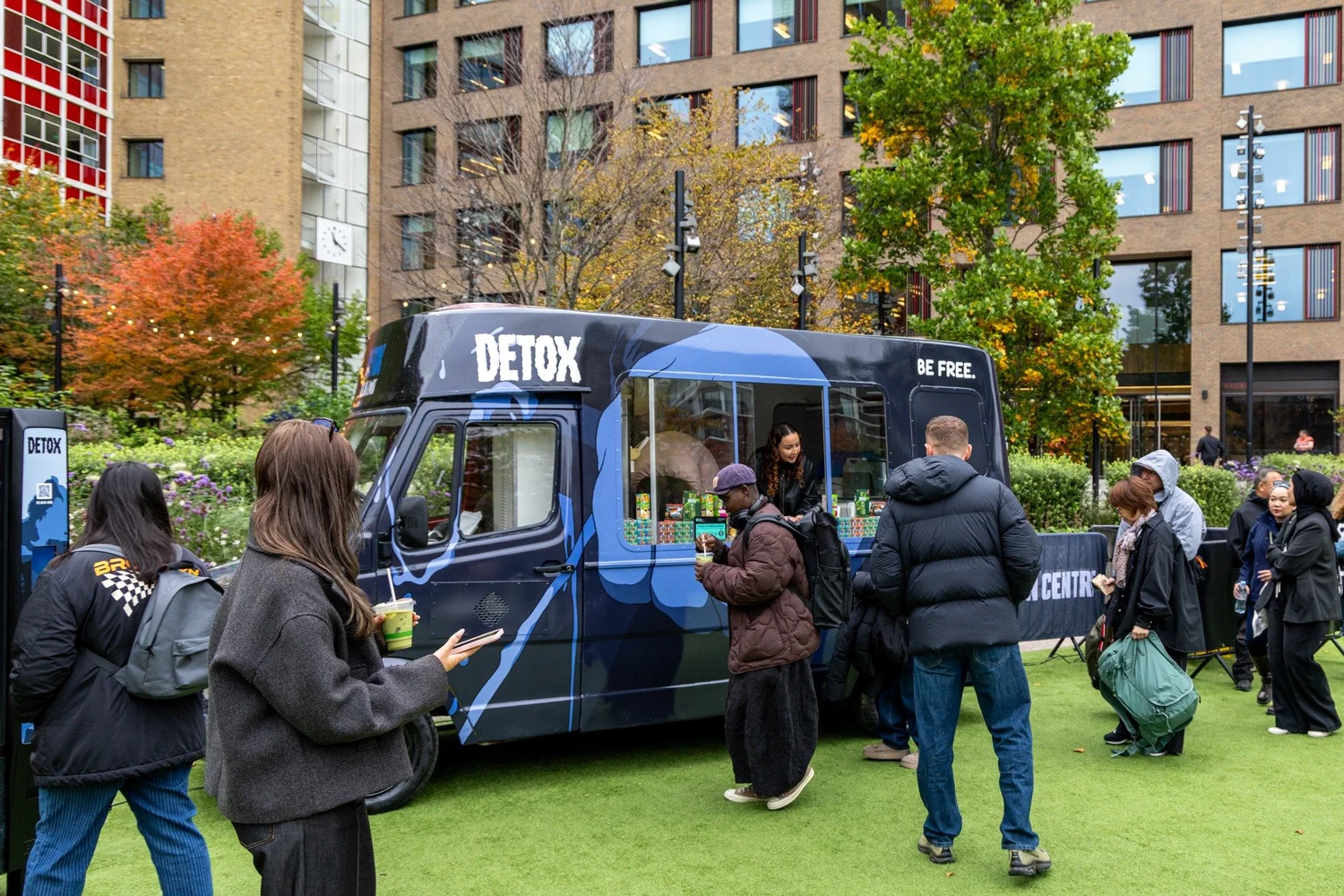
A music campaign can give fans a place to gather around an artist's identity, with a different pace from listening through headphones or watching a screen.
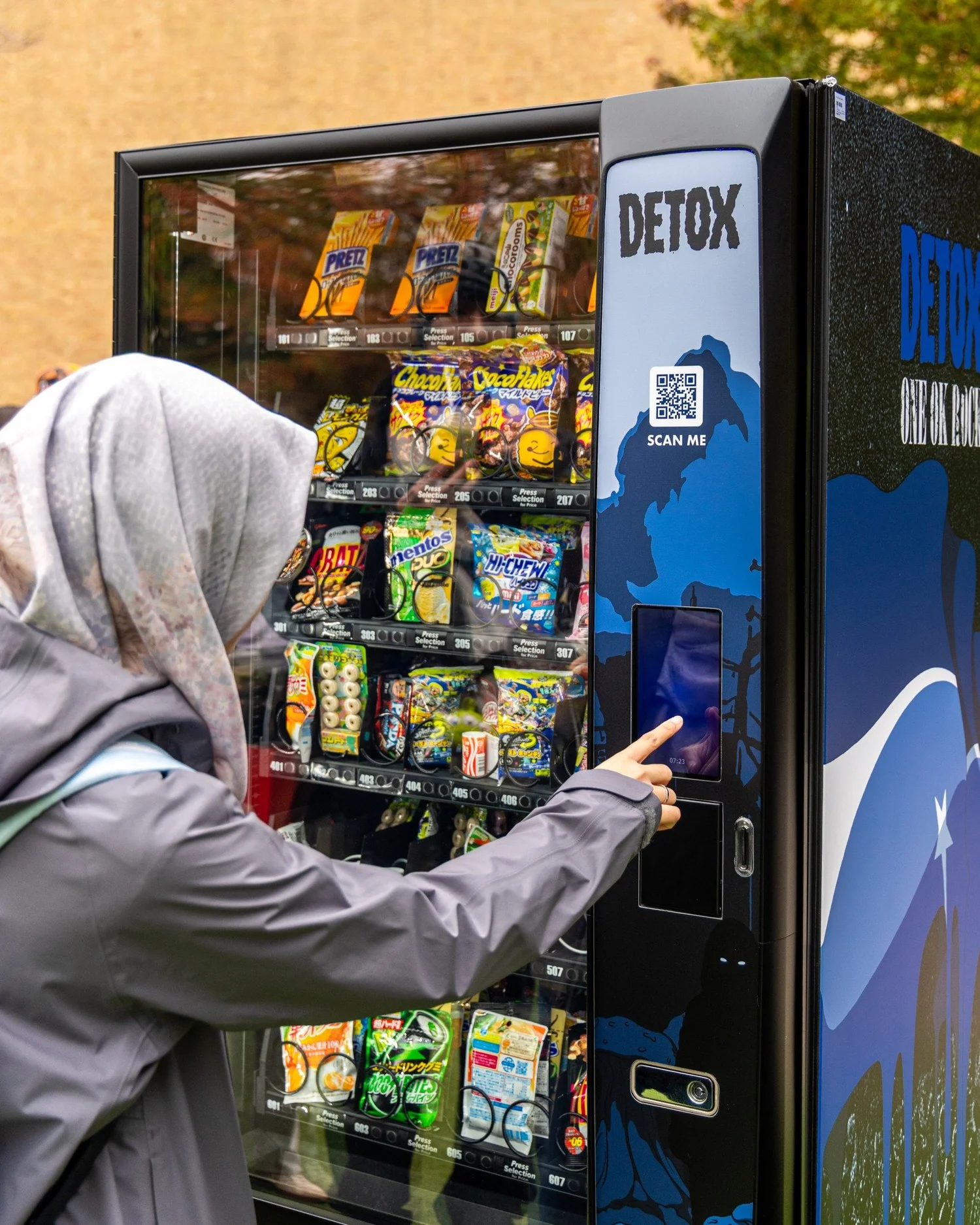
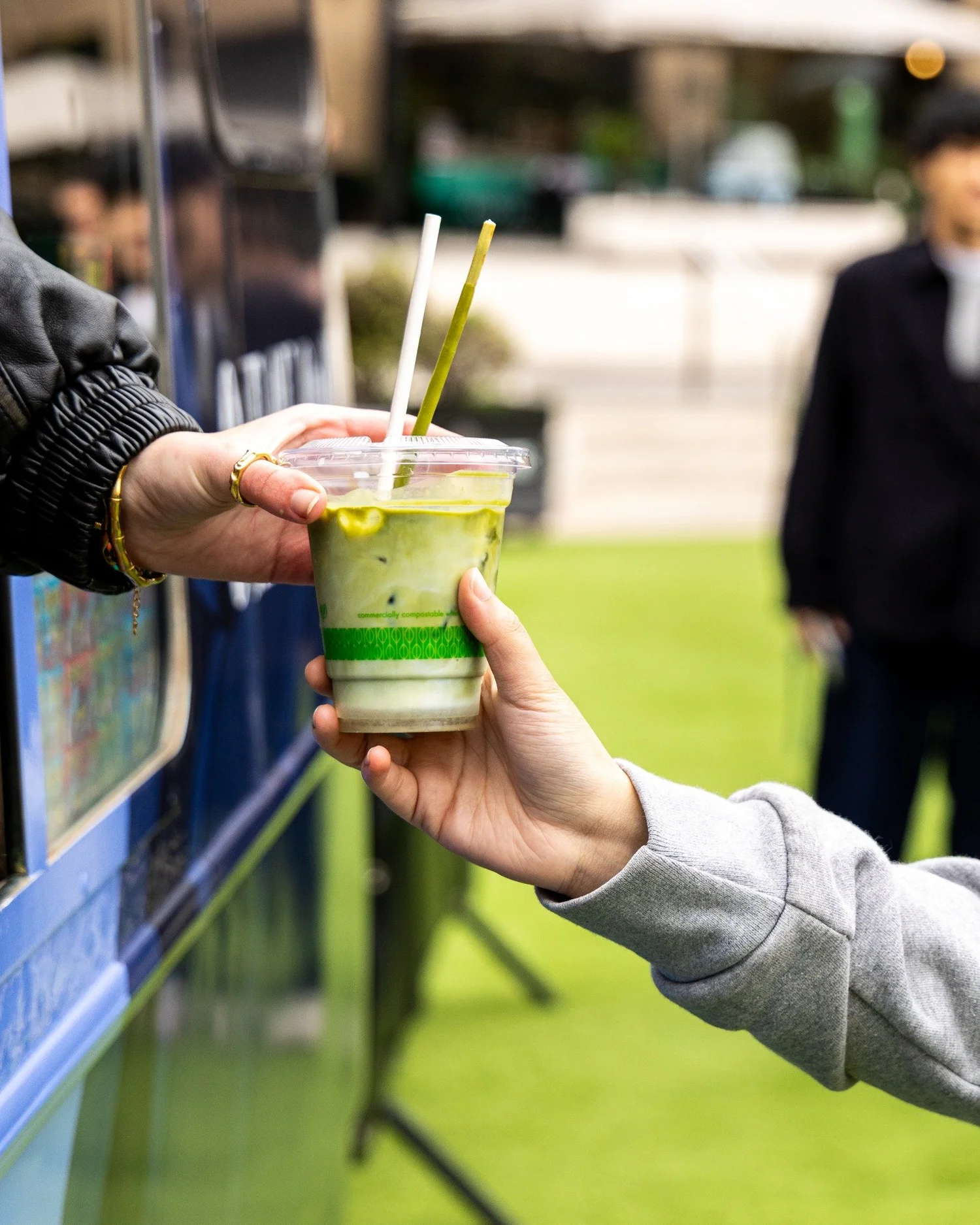
Working with Universal Music for ONE OK ROCK, we paired a DETOX-branded Mercedes truck serving Japanese-inspired matcha drinks with an adjacent branded vending machine stocked with Japanese sweet treats. The truck and the machine created two distinct points of interaction within the same setup.
That pairing opens up the creative possibilities. A staffed hatch brings conversation and preparation into the experience. A vending machine offers a different ritual: looking through the selection, choosing something and collecting it. The Japanese-inspired menu gave the food and drink choices a clear theme across both formats.
For a future music brief, think about what a fan should be able to recognise and explore. The artwork might run across both the vehicle and a separate installation. The menu could reference an agreed campaign theme. A small takeaway could continue the visual story after someone leaves. Develop those choices with the artist or label team so the physical experience feels connected to the campaign.
Then draw the space between the two attractions. A vending machine needs room for someone to browse without obstructing the serving queue, along with a plan for access and replenishment. The truck needs its own working and collection area. Considering both together gives the design team a more useful starting point than treating the machine as a last-minute prop.
Build around the people who will turn up
The audience's reason for turning up can be a stronger guide than a favourite menu format.
Free Soul: connect the sample to the product
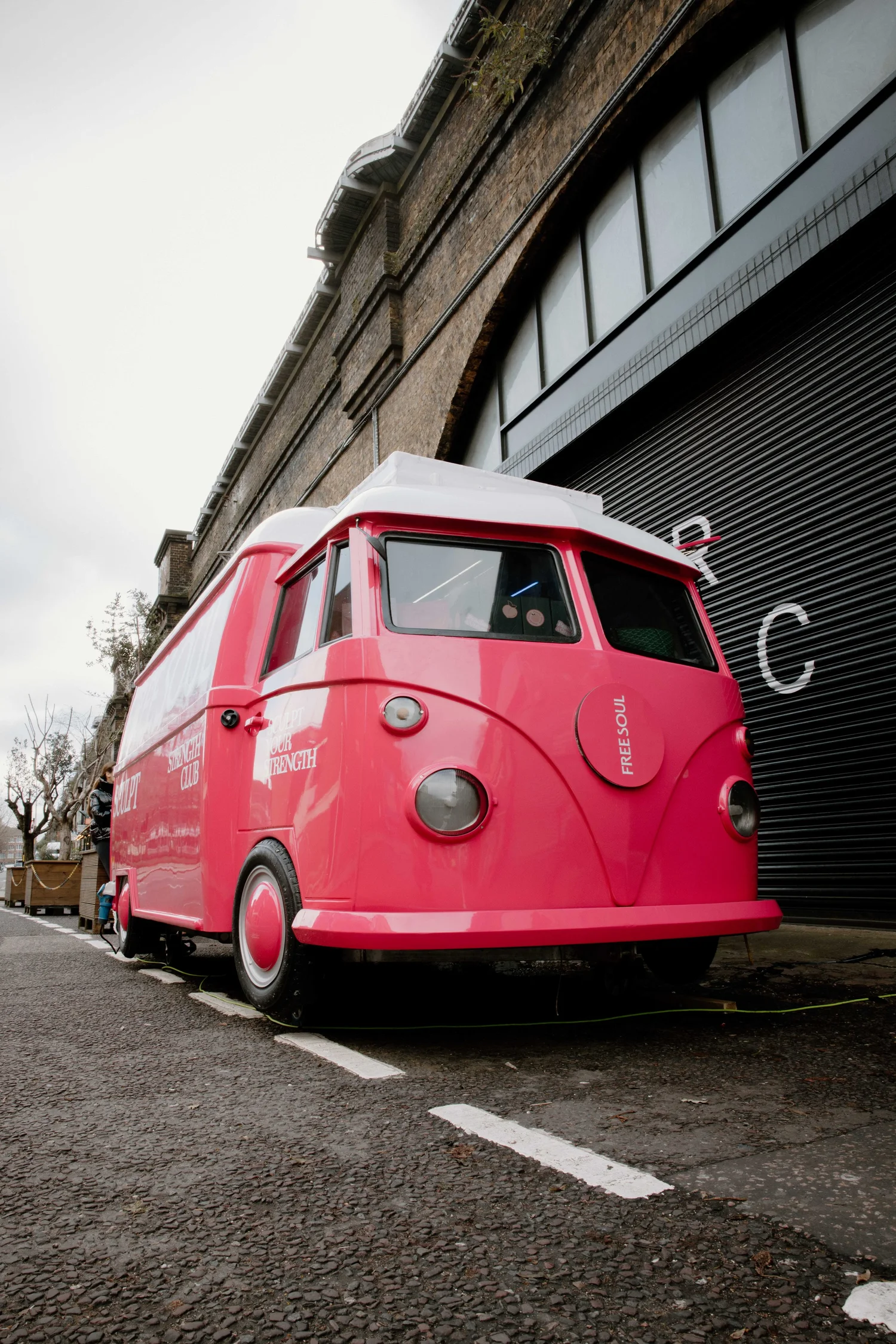
For protein brand Free Soul, the pink branded truck served protein smoothies, connecting the drink directly to the brand's product world. The vehicle was fully wrapped, with transport, setup and logistics managed as part of the project. For a product-led brief like this, think about how a guest will discover what they are tasting, ask a question and find the product afterwards. Leave room for the conversation as well as the serving equipment.
Runna x lululemon: make a stop around the run
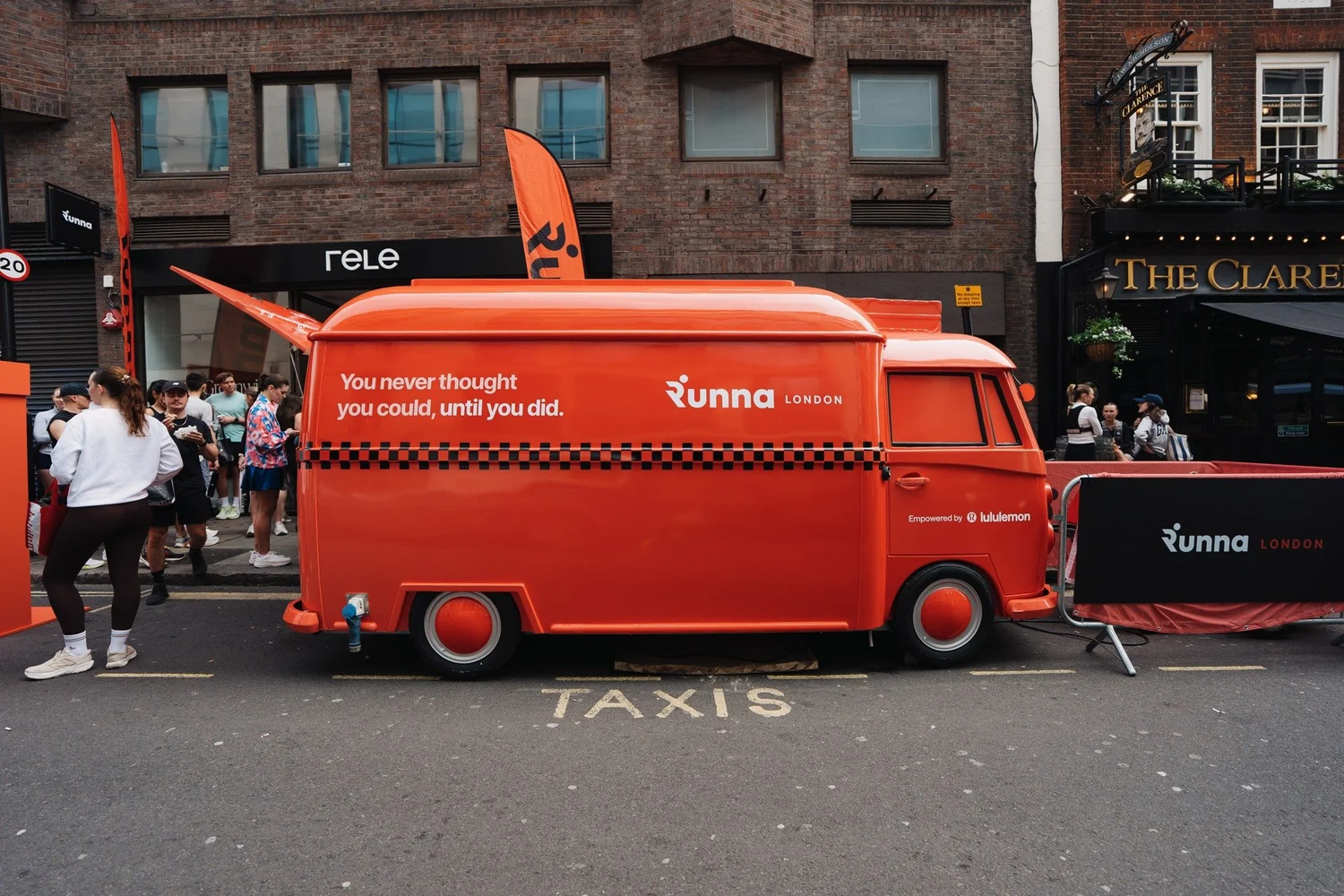
The Runna x lululemon truck experience brought bagels, hot pizza slices and coffee to a London Marathon weekend. Here, the menu belonged to the occasion and the people gathered around it. There is a useful planning lesson in that mix of food and drinks: different serving points or service periods may need different preparation, packaging and staffing. A warm sample or coffee also changes the practical setup from an ice cream-led experience.
London Taste Collective: put the city on the menu
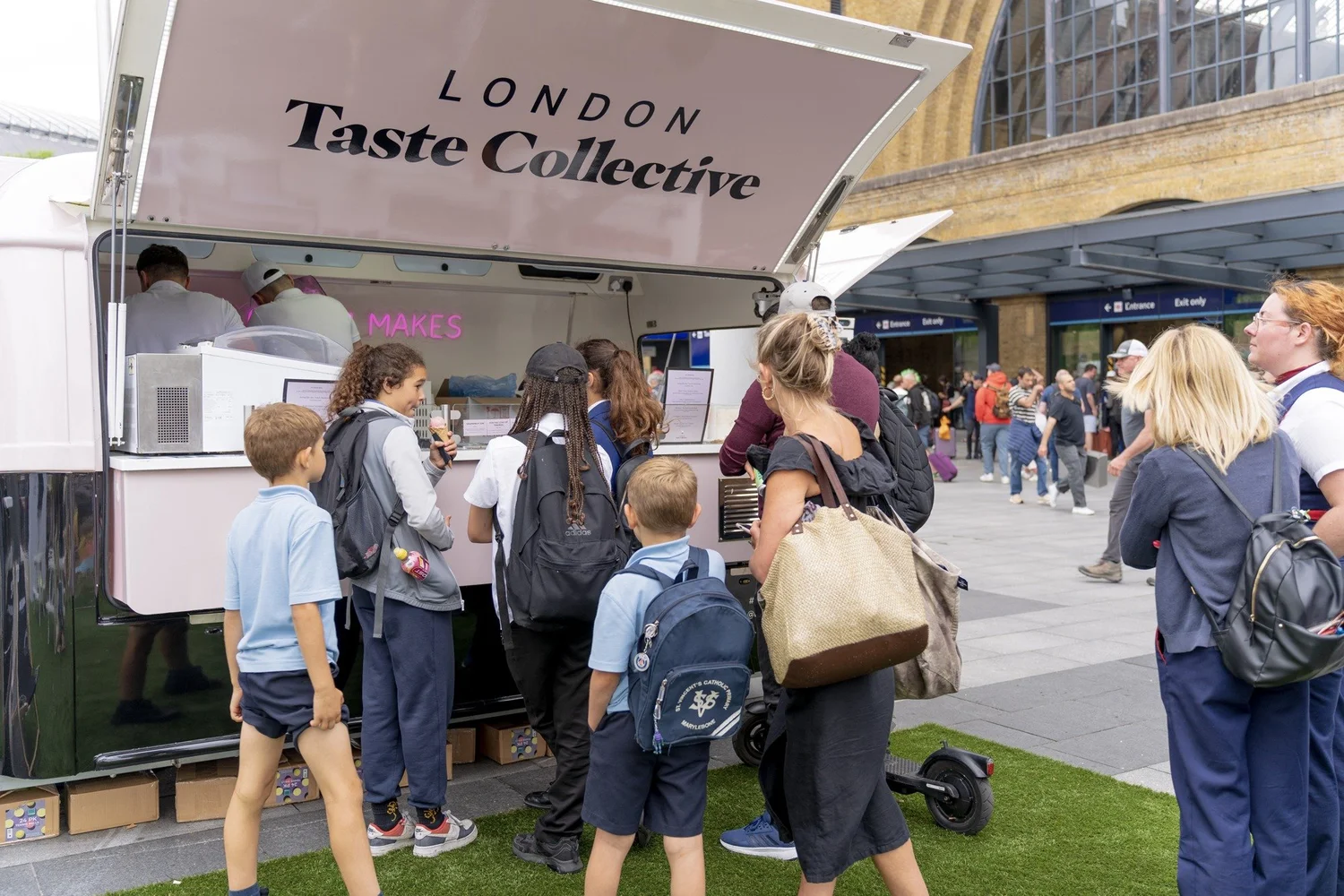
For a two-day King's Cross event, Pan-n-Ice partnered with London Taste Collective to serve scooped ice cream from a fully branded vehicle. The menu took inspiration from London restaurants, giving the food a connection to the city around it.
That opens up a different direction for a tasting brief. A neighbourhood, a dining culture or a collaboration can provide the starting point for the menu and its presentation. A simple menu board and a clear description of each flavour can make that story part of the ordering experience.
PURESEOUL x Dinto: bring books and beauty together

For PURESEOUL x Dinto, World Book Day provided another starting point entirely. Near Trafalgar Square, a branded VW truck supported beauty sampling and a community book swap, with brand ambassadors introducing the products. Rolling Minds supported the creative direction and branded the truck. The book exchange gave visitors a way to participate beyond receiving a sample.
Food had no role in that idea. A vehicle can be a base for a cultural activity, a product demonstration or a conversation. Before selecting a menu, ask what would feel genuinely relevant to this audience, on this particular day.
Fashion and beauty: change the setting, keep the brand recognisable
A festival field, a retail stop and a beauty campaign ask different things of a promotional truck. The vehicle's identity needs to hold together while the experience suits its surroundings.
PrettyLittleThing: take the identity into the festival
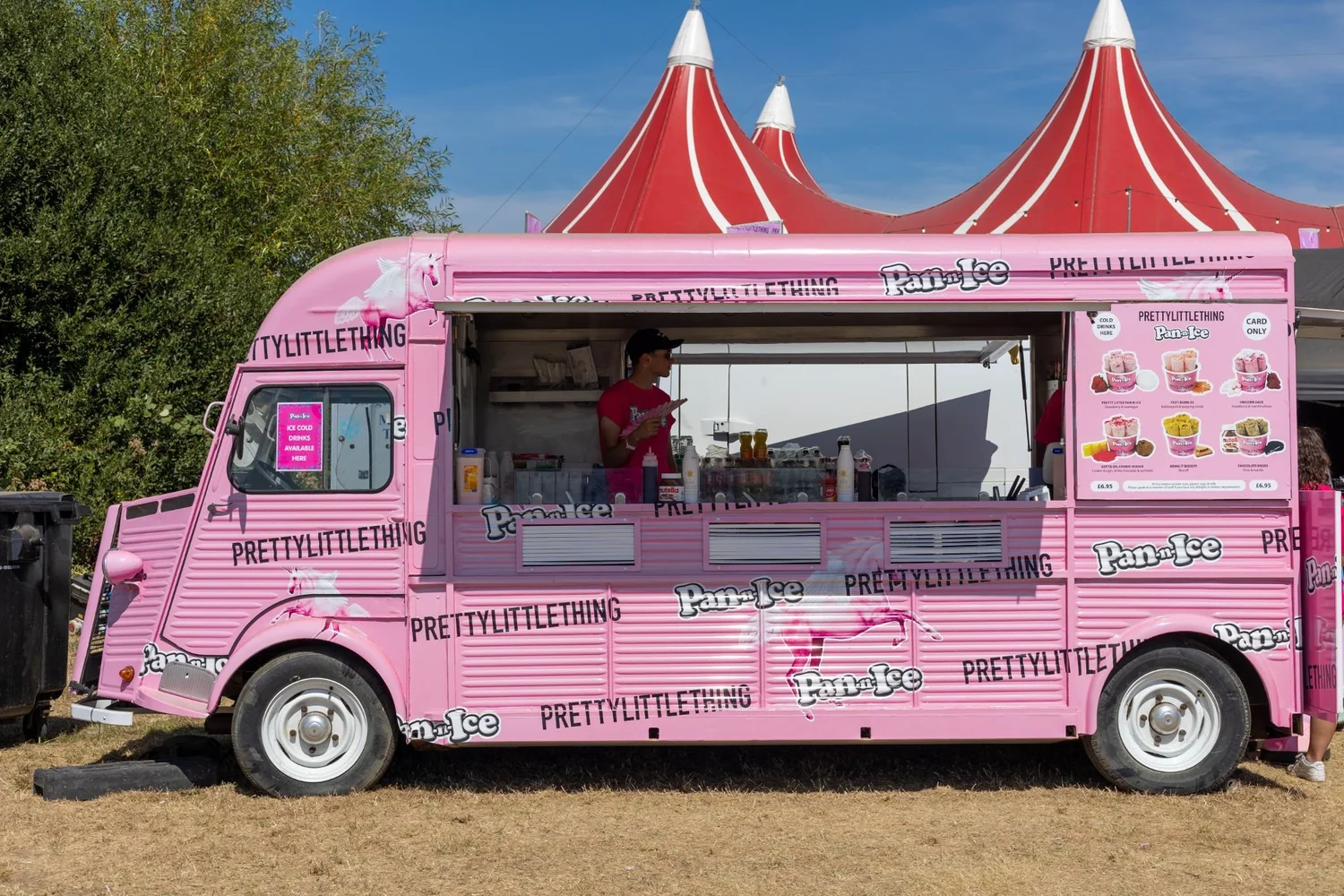
For PrettyLittleThing's festival activation with Pan-n-Ice, a branded HY truck was paired with a bespoke menu, custom flavours, branded cups and tubs, and branded fans. Those handheld details suited a festival setting and carried the identity beyond the serving point. When planning a similar brief, consider what guests will already be carrying and whether the serving format makes sense for people moving between different parts of an event.
Ted Baker: give a touring campaign a consistent identity
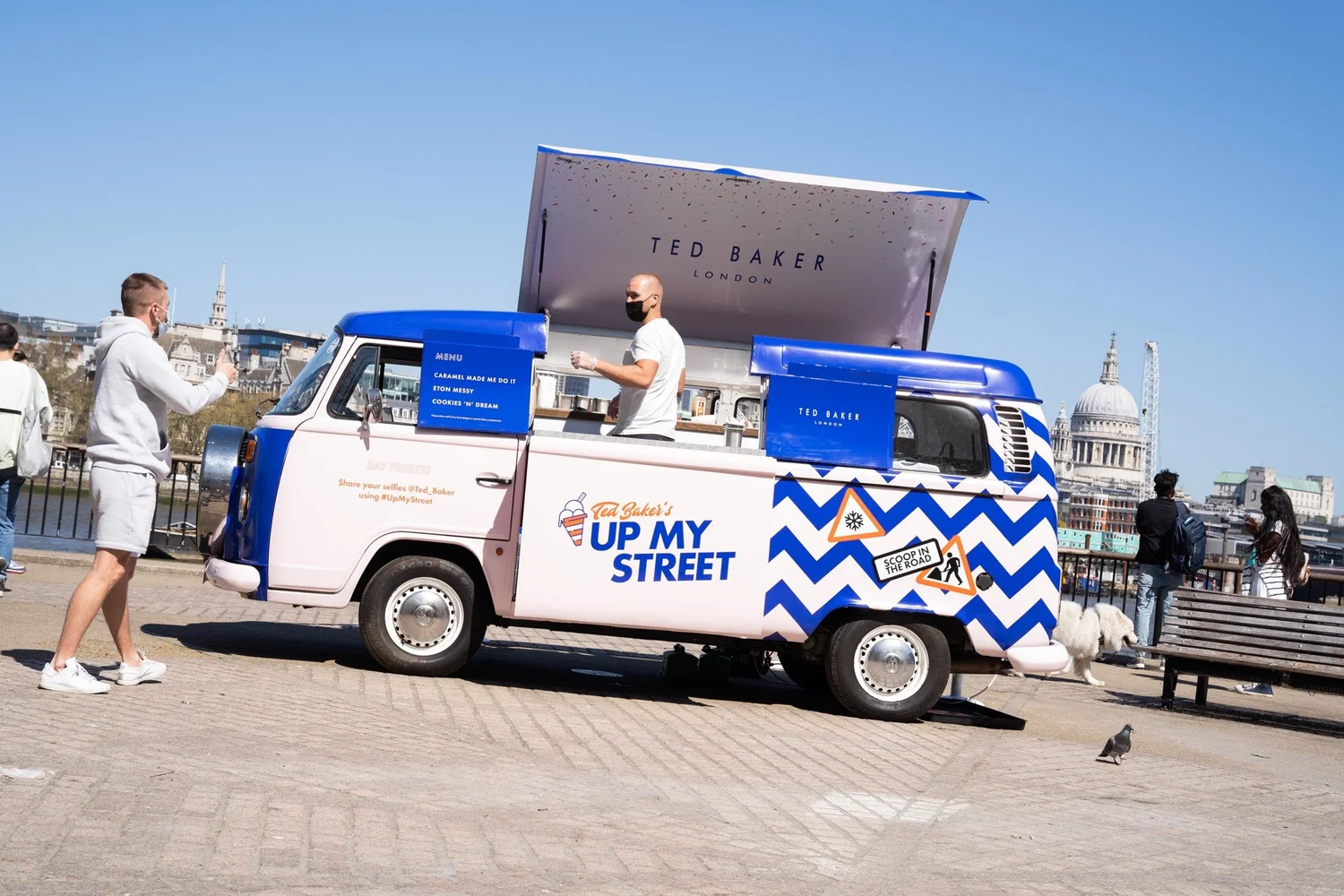
Pan-n-Ice joined Ted Baker's #UpMyStreet UK tour with a branded vehicle, custom-flavour ice cream rolls and branded cups. A touring idea needs a recognisable core that can travel: the vehicle treatment, the menu and the handover should feel connected from stop to stop. Build in enough flexibility for a different pitch or approach route, while keeping the details that identify the campaign consistent.
H beauty: carry the finish through to the serving
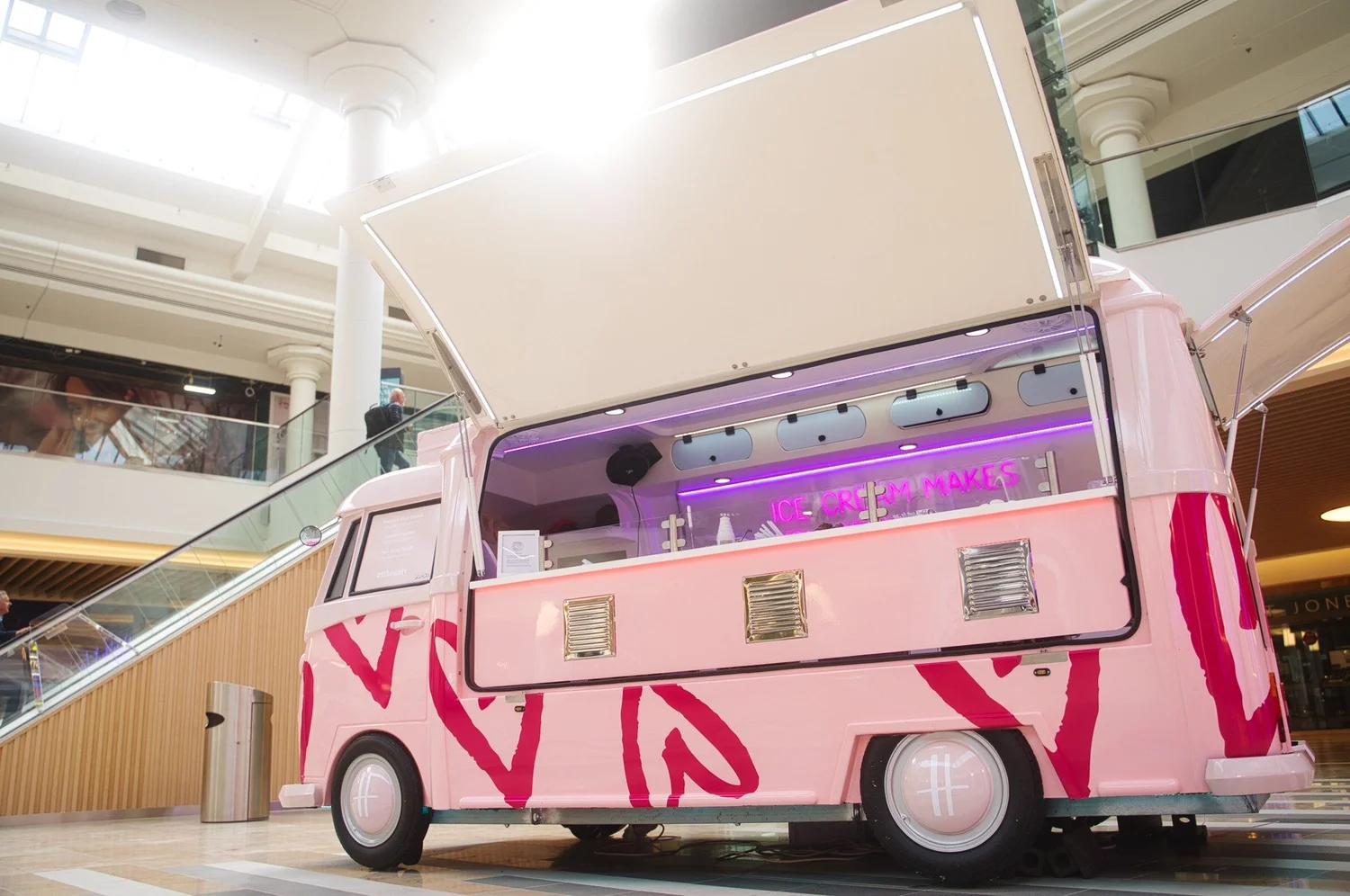
For Harrods' H beauty opening at Metrocentre, Pan-n-Ice supplied a branded VW-style truck, with custom-flavour ice cream rolls and branded cups. It is another way of giving a beauty brand a tasting experience without asking the food to stand in for the product itself. Think about the colours, finish and presentation someone encounters up close, as well as the full vehicle seen from a distance.
Across these examples, the cup, tub or takeaway deserves its own design attention. It will be handled, tilted, carried and photographed in ordinary use. Check the artwork at that scale, rather than assuming that a successful vehicle graphic will work unchanged on every surface.
Smirnoff Ice at Cannes Lions: define the vehicle's role
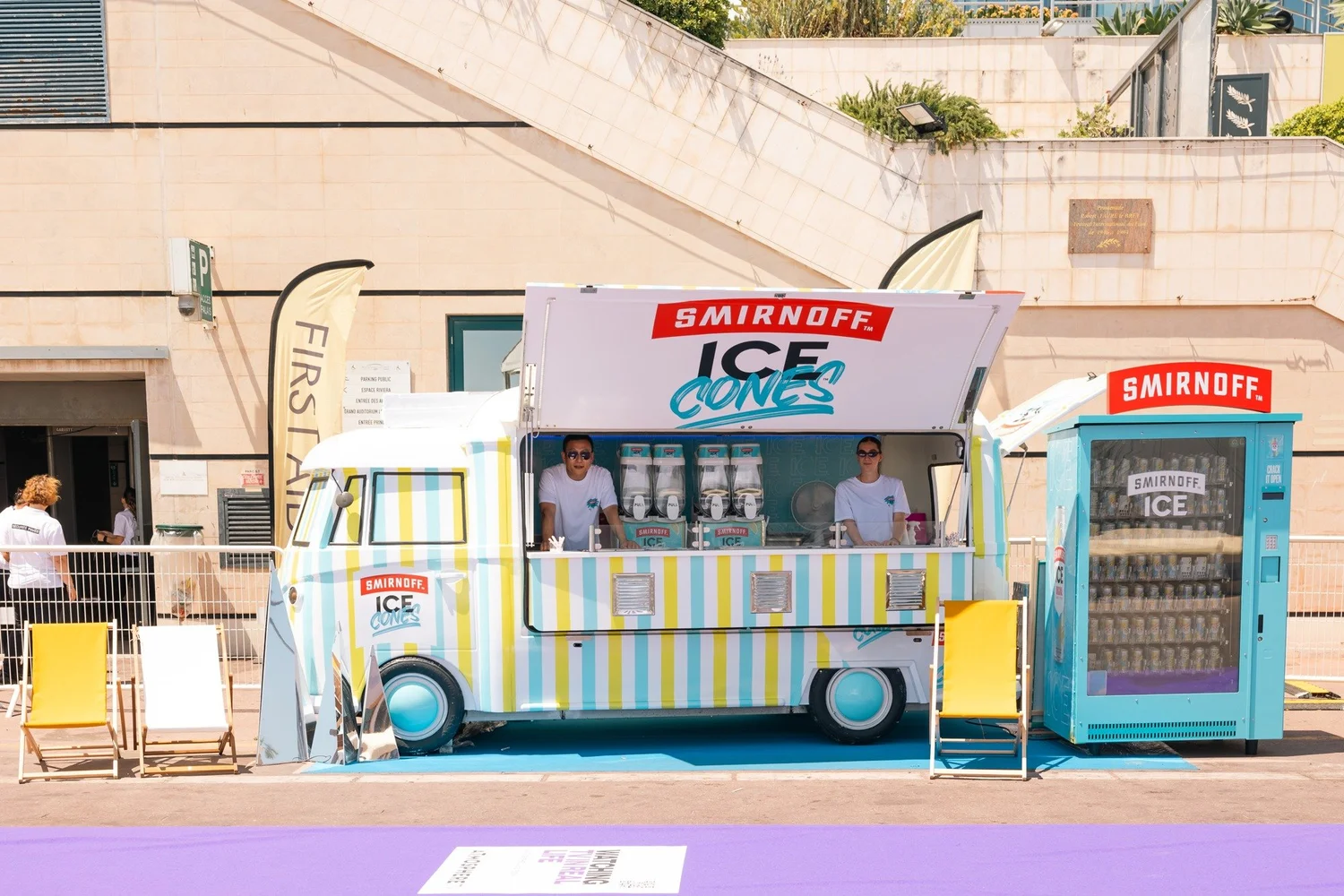
Some activations bring several agency teams together, each responsible for a different part of the experience.
For Smirnoff Ice at Cannes Lions, we worked with Verve Live agency and supplied the branded vehicle only. Verve Live handled everything else, including the drinks and slushies, staffing and props around the vehicle. The branded vehicle was our defined contribution to their wider activation.
For an agency-led brief, agree those responsibilities early. Who supplies the menu and service equipment? Who approves the wrap? Who is responsible for the surrounding set dressing? Who coordinates the vehicle arrival and hands the pitch over to the operating team?
A clear division of work helps the vehicle fit into an established campaign. It also lets a partner agency bring us in for a defined element, while a brand seeking a complete activation can brief the wider design, production and service scope together.
Design the space beyond the serving hatch
Look across these projects and the surrounding details deserve as much attention as the vehicle. Flooring, seating, parasols and product plinths can give an activation a sense of place. They also change how people move through it.
Start by drawing the whole footprint. Include the open hatch, working area, guest approach, queue, collection point and the space someone needs after receiving a drink or ice cream. A vehicle that fits into a marked pitch can still leave too little room for the experience around it.
Give every piece of furniture a job
Seating can offer a welcome pause, but its position matters. Chairs should not narrow the route to the hatch or put seated guests in the middle of a queue. Umbrellas and parasols can add colour and help define a seating area; their suitability and installation need to be checked for the site and conditions. Decide whether a display plinth is for viewing, handling products or a staffed demonstration before choosing its location.
Custom flooring can connect the truck to the surrounding space, as it did for Olivia Burton x H.Samuel. In a new brief, consider its edges, surface, transitions and suitability for the venue as well as the artwork. Plan an accessible route through the experience and a comfortable way for guests to interact with staff.
Let the queue tell people what to expect
A guest should be able to work out where to join, what is available and what happens next. Put essential information where it can be read before the handover, rather than expecting the server to explain everything at the busiest point.
If there is a game, product conversation or photo opportunity, think about whether it belongs before or after collection. Separating a longer interaction from a quick food handover can make both easier to enjoy. Leave a clear exit, and give people somewhere sensible to finish their serving and dispose of packaging.
Finally, review the experience in ordinary conditions, not just the clean opening photograph. Where do spare supplies go? What needs replenishing? Where will the team stand? These are small decisions with a large influence on how considered the finished space feels.
Connect the creative to the delivery plan
An ambitious design becomes easier to deliver when the people shaping the visuals, menu and operation work from the same brief.
At Rolling Minds, our in-house graphic design team can develop the look across the vehicle, cups, menus, cards and surrounding branded details. We manage vehicle wrapping and coordinate transport, set-up and pack-down, alongside print and production, staffing, food and drink service, and the wider installation as part of the agreed activation scope.
That joined-up planning creates useful conversations early. If a key message sits on the hatch, what happens when it opens? If the cup has a detailed design, how will it look in someone's hand? If a bespoke flavour needs particular preparation, what equipment and working space does it require? If the campaign includes a large parasol or seating area, how will those items travel and fit on site?
The menu can include drinks, ice cream or warm sampling, with the choice shaped around the event rather than added at the end. The same applies to the wider setting: umbrellas, seating, queue layout and flooring should be considered alongside the wrap, not treated as an afterthought.
Our brand activation design and production service covers that connection between creative concept and physical detail. For formats and mobile campaign delivery, explore branded vehicle activations.
If the idea will visit several locations, test how it adapts before committing to a single layout. Site access, available space and the audience's reason for being there can vary between stops. Our article on the power of a branded truck tour looks more broadly at taking a campaign on the road.
What to put in the brief
You do not need to arrive with a finished sketch. A clear audience and an interesting ambition are a useful place to begin.
Tell us who you want to meet, what you are launching and what you would like guests to do. Share the dates, locations or proposed setting, along with the budget range and any campaign artwork already in development. If food or drink has a role, explain whether you have a particular product, flavour or mood in mind.
It also helps to distinguish the essentials from the possibilities. The collection might need a prominent display; the exact vehicle colour could still be open. A tasting may be central to the idea; a seating area may depend on the site. Decide what you want to learn from the activation, too, so any measures or guest feedback can be planned before the doors open.
From there, the creative can take shape around the whole visit: the first glimpse of the vehicle, the reason to approach, the interaction at the hatch and the detail someone carries away.
Let's work out what should happen when your brand rolls in.